



Six miles at sea.’ Charles Beck put it on paper first. But it took a guy from Johnstown, Pennsylvania — who fell hard for this island and never really got over it — to make sure it stuck.
That man was John Bailey Lloyd. Here’s why he matters.
Every Long Beach Island Story Starts The Same Way
Lloyd began making his Long Beach Island memories the same way most of us do — as a visitor. His first trip was in 1942, from Johnstown, Pennsylvania. Five hours, give or take, depending on which roads the family took. The Pennsylvania Turnpike had just opened the year before — built as part of Roosevelt’s New Deal, the nation’s first long-distance, high-speed superhighway cutting straight through the Allegheny Mountains. It was a marvel.
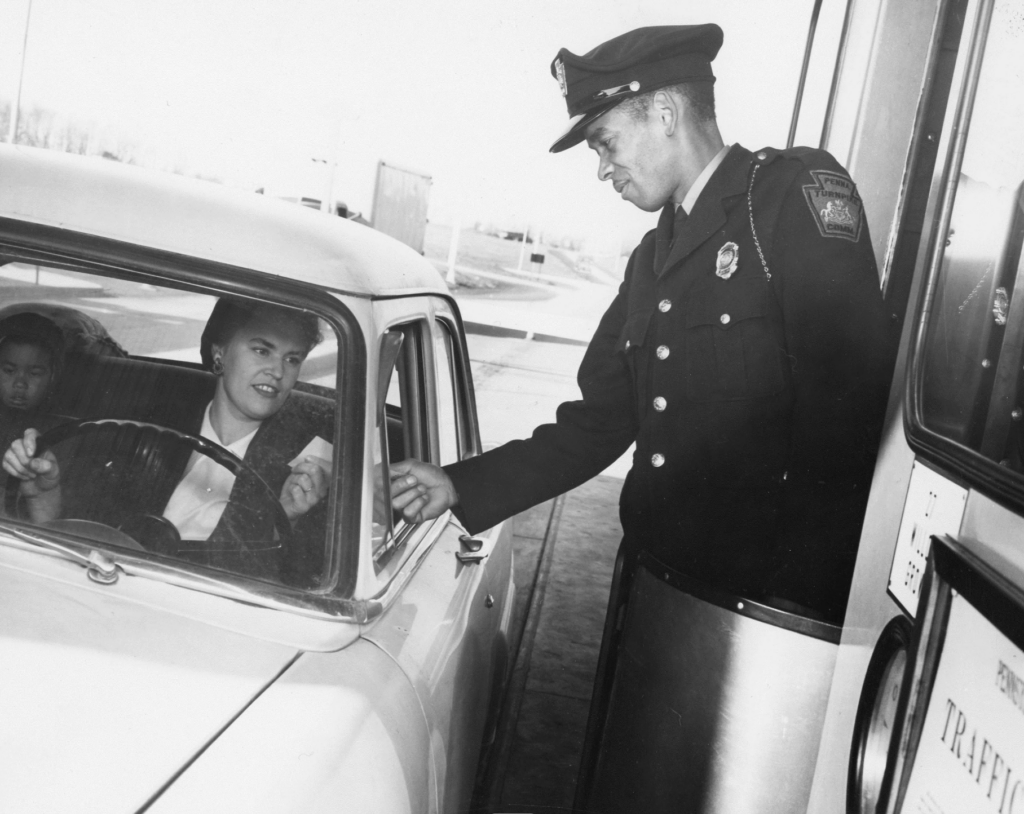
But the Lloyd family probably stuck to the back roads they knew — Route 22 through Pennsylvania, then Route 72 winding through the Pine Barrens. Gas rationing during World War II made every mile count, and familiar roads were efficient roads. The two-lane Route 72 still delivers people to the island the same way it did for the Lloyds.
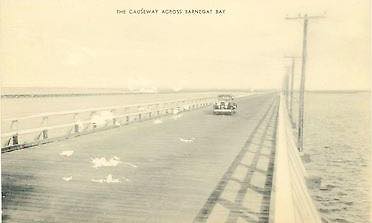
The Causeway Bridge looked different back then. Two lanes. Wood planks. Just barely hovering over the bay. But I’d bet the feeling of crossing it was exactly the same — that exhale, that shift, that moment when the water opens up on both sides, and you know you’re almost there.
Somewhere along the way, the Lloyds started doing what every island family does. “Call me when you’re on the bridge” — so whoever was waiting in Beach Haven knew it was time to start dinner.
Once He Was Here to Stay
Not much is known about Lloyd’s early years on the island, but his friend and publisher, Ray Fisk, put it best — Lloyd arrived on Long Beach Island in time to see things most of us only read about now. The Beach Haven boardwalk. The Engleside Hotel. The island before it was the island we know today. Wide open. Unhurried. A little wild around the edges.
And then in 1977, Lloyd made it official. He moved into his 1870s three-story Victorian beach house full-time, trading part-time visitor for permanent islander. Once he was here to stay, the real work began.
By the 1980s, Lloyd was spending every spare moment chasing down the island’s past. He dug through archives, tracked down old-timers, and pieced together stories that might have otherwise walked out the door with the last person who remembered them.
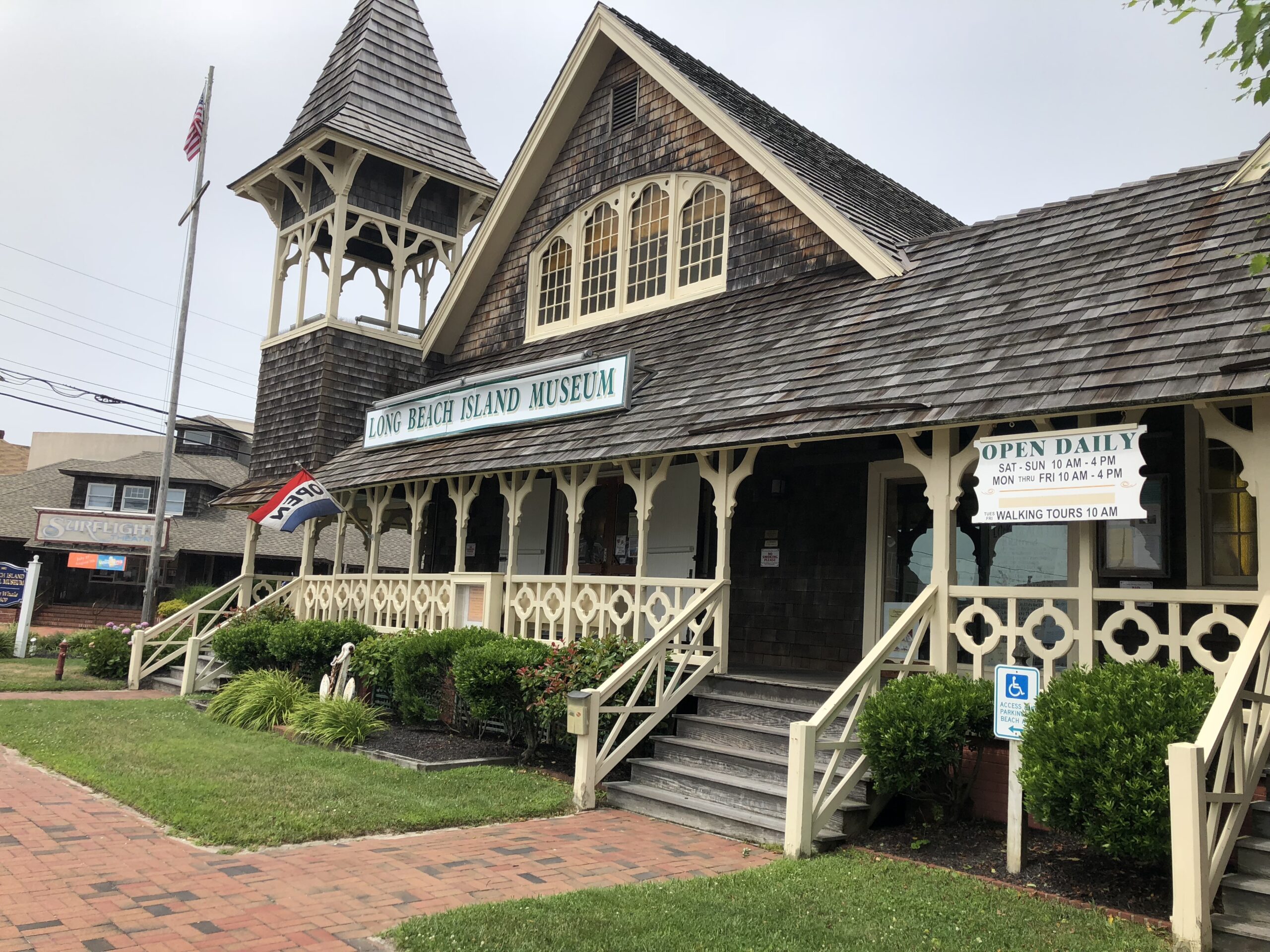
For a decade, he wrote a column called “A Moment in Time” for the Beach Haven Times. Every installment was a small act of preservation — a neighborhood, a landmark, a name, a story — handed back to the community that lived it. He also led weekly discussions for the Long Beach Island Historical Association, where island history stopped being something you read about and became something you talked about — alive in the room, if only for an hour.
Three Words That Almost Didn’t Make It
How does a phrase by Philadelphia printer Charles Beck still mean something to this island more than a century later? The short answer is John Bailey Lloyd.
Beck coined ‘six miles at sea’ in 1906 to describe the distance between Tuckerton Seaport and Beach Haven on the bay — and to set Long Beach Island, New Jersey apart from Long Island, New York once and for all. Real estate agents saw the marketing potential immediately. Before long, the phrase was everywhere: billboards, brochures, postcards, letterheads, and even affixed to automobile license plates.
But slogans have a shelf life. As Lloyd himself wrote, ‘six miles at sea’ belongs to “a time and a way of life that grows farther from us with each year.” The phrase faded. And it might have disappeared entirely if Lloyd hadn’t loved this island enough to keep telling its stories.
Lloyd brought it back without really trying to. It lived in his stories, in his columns, in his books — and once it was back on the page, it never left. Today, any time a first-time visitor asks what ‘six miles at sea’ means, someone who loves this island is ready with the answer. More often than not, it’s Lloyd’s words they’re reaching for.

That’s what happens when someone loves a place enough to write it down. The place lives longer. The stories outlast the storyteller. And the words — the right words, the ones that actually capture something true — have a way of finding their way back home.
I think about that every time I cross the bridge. Every time I smell the salt air before I can even see the water. Every time someone who’s never been here asks me what LBI is like, I find myself reaching for words that were never really mine to begin with.
Lloyd had a truly poetic way of sharing history — not as a series of facts to be cataloged, but as a feeling to be passed on. He said it best himself, in the opening of his 1990 book Six Miles at Sea:
“Three years of writing and research have led me to one simple truth: everyone who ever came to this island — with the possible exception of the shipwrecked — came out of pure enjoyment and returned year after year for the same reason. We share a happiness that is rare, indeed. That is what Long Beach Island means. It always will.”
He was right. It always will.
Sources
Nash, Margo. “Memories of the Historian of Long Beach Island.” The New York Times, August 17, 2003.
Lloyd, John Bailey. Six Miles at Sea. Down the Shore Publishing, 1990.
Down the Shore Publishing. John Bailey Lloyd Collection. down-the-shore.com
Further Reading
You can find Lloyd’s books directly through Down the Shore Publishing or on Amazon through the links below:
Eighteen Miles of History, Six Miles at Sea, and Two Centuries of History
Comments +